If you have ever listened to a team principal explain a pit stop call by saying it was just "a feeling," I want you to ignore them. In modern endurance racing, there is no room for intuition. When a car is barreling down the Mulsanne Straight at 200 mph, the decision to box isn't made because someone had a hunch; it is made because a computer just ran 50,000 versions of the next hour of racing.
This is the Monte Carlo principle. It is not magic, and it is certainly not a crystal ball. It is simply a way of dealing with the fact that we can never be 100% sure about the future.
Monte Carlo Explained: The Art of the Simulation
At its core, a Monte Carlo simulation is a mathematical technique that uses random sampling to solve problems that might be deterministic in principle but are too complex to solve analytically. In plain English: we don't know exactly what will happen, so we simulate every possibility we can think of, thousands of times over, to see what the "average" outcome looks like.
Think of it like a deck of cards. If you want to know the probability of drawing an Ace, you can do the math. But if you want to know the probability of a Safety Car occurring between lap 40 and 45, the weather changing at Turn 3, and your lead driver getting stuck behind a GT3 car with a tire pressure warning—you can’t just "do the math." You need to run a simulation.
By running these scenarios repeatedly using random sampling, the simulation populates a distribution of outcomes. If 80% of our simulations show we lose 12 seconds in traffic, and only 5% show we gain time, the decision to pit becomes obvious. We aren't predicting the future; we are mapping the probability of it.

The Math of Uncertainty
Let’s run a quick back-of-the-envelope sanity check. Suppose the chance of a Full Course Yellow (FCY) is 10% per hour. Over a 24-hour race, if you assume the FCY happens linearly, you’ll miss the nuance. However, if you run 10,000 simulations, you get a beautiful bell curve of when those cautions are likely to land. This helps the pit wall understand the "tail risks"—the rare, catastrophic scenarios that can end a race before the checkered flag.
Telemetry: The Fuel for the Machine
A Monte Carlo simulation is only as good as the data you feed it. In racing, that data is telemetry. We are talking about massive data density: tire degradation rates, brake temperatures, fuel consumption per lap, and sector times down to the millisecond.
When we pull this data, we aren't just looking at the averages. We look at the variance. If a driver’s lap time standard deviation is tight, our simulation confidence increases. If the data is noisy, the simulation produces a wider spread of results, signaling to the strategist that the uncertainty is too high to make a bold move. As discussed in academic journals like Applied Sciences (MDPI), the reliability of these predictive models hinges entirely on the quality of the input distributions. If you put garbage data into a simulation, you get a "garbage" probability distribution out.
Real-Time Decision-Making on the Pit Wall
On the pit wall, you don't have time to wait for a supercomputer to render a complex 3D model. You need answers in seconds. This is where tools modeled after the Monte Carlo principle excel. They aren't trying to be "game-changing"—a term I despise because it masks the hard work involved—they are simply tools for risk management.
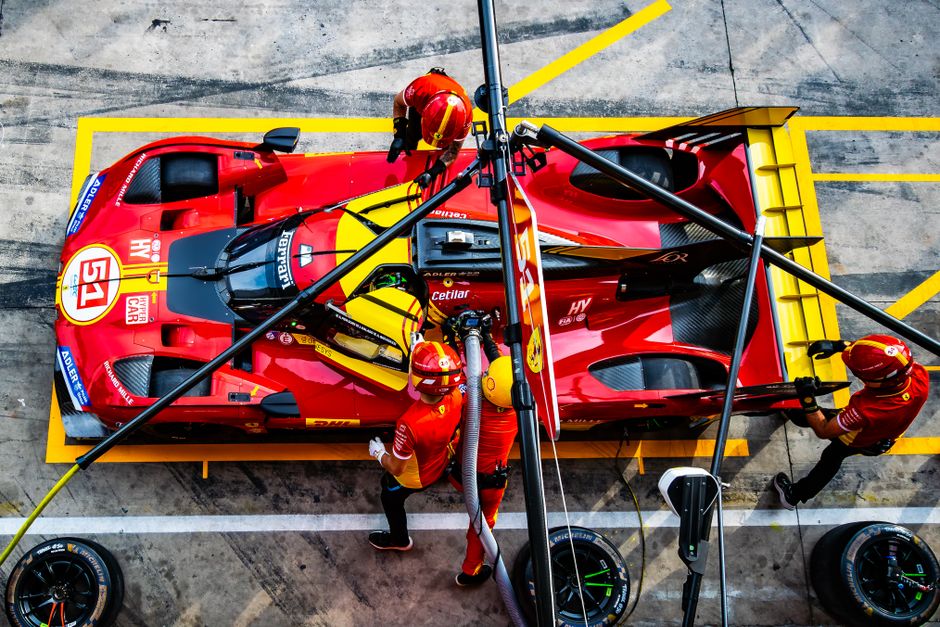
While industry leaders like MIT Technology Review often cover these algorithms in the context of high-finance or heavy engineering, the application on the pit wall is remarkably similar. We are essentially betting on the most likely outcome. It is a bit like the logic behind a random number generator used by companies like MrQ to ensure fairness in gaming; we are looking for a statistically sound distribution that allows us to operate within a range of expected behaviors.
Deterministic vs. Probabilistic Models
To understand why we rely on Monte Carlo, look at this breakdown of how strategies are evaluated:
Feature Deterministic Model Monte Carlo (Probabilistic) Input Data Fixed Averages Probability Distributions Outcome Single Point Estimate Range of Outcomes (Spread) Primary Use Simple Fuel Calculations Complex Strategy/Risk Analysis Weakness Ignores "What-If" Scenarios Computationally IntensiveThe Limitations: A Necessary Call-Out
I need to be very clear here: Monte Carlo simulations are not a complete comparison to real-world racing. A simulation can account for variables, but it cannot account for human ego. If a driver decides to push 2% harder than the fuel map suggests because they are angry about being overtaken, the simulation’s fuel consumption distribution just became irrelevant.
We often see people overstating the certainty of these systems. They treat the https://reliabless.com/the-mirage-of-the-hot-spin-why-you-cannot-predict-randomness/ 70% probability as a 100% guarantee. That is how races are lost. When you rely on a probability, you must accept that you are operating in the 30% "failure" zone just as much as the 70% "success" zone. You don't ignore the tails of the distribution; you plan for them.
Why It Matters to the Fan
If you are watching from the grandstand or at home, understanding the Monte Carlo principle changes how you perceive the race. When a team stays out on old tires while the rest of the field Website link pits, they aren't "rolling the dice" or relying on "instinct." They have likely run a simulation that suggests the probability of a rain shower in the next 15 minutes is high enough that the risk of staying out is lower than the risk of burning a fresh set of rubber.
Strategy is not about knowing what will happen. It is about understanding the landscape of what *could* happen, and choosing the path that keeps you in the hunt even when the variables go against you.
Summary for the Race Day Observer
Data is King: Every bit of telemetry from the last 20 laps informs the simulation for the next 20. Variance is Information: A wide spread in outcomes isn't "bad data"; it’s a warning that the situation is volatile. Probability Beats Instinct: Any strategist who claims they have a "feel" for the race is someone who hasn't looked at their data samples.Next time you see a team delay a pit stop, don't assume they are guessing. Assume they have run the numbers. Somewhere on that pit wall, a laptop is churning through thousands of scenarios, balancing risk, and trying to steer the car toward the most probable path to the podium.